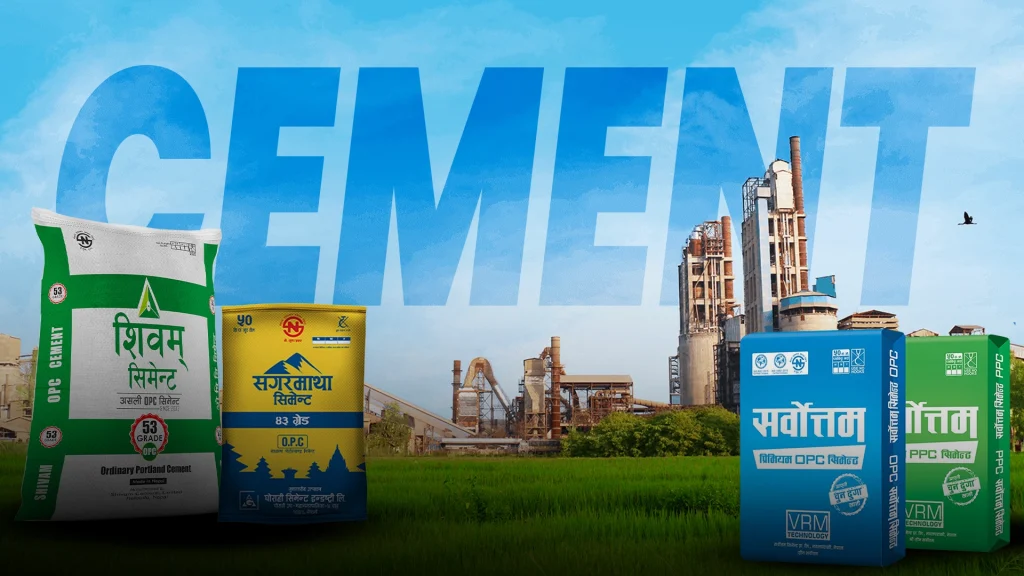
The industrial evolution of Nepal is perhaps most visibly encapsulated in the trajectory of its cement sector. Once a nation entirely dependent on the structural outputs of its neighbors, Nepal has successfully engineered a transition into a self-sufficient producer, now characterized by significant overcapacity and a strategic pivot toward international exports. This shift is not merely a matter of increased tonnage but represents a fundamental reconfiguration of the country’s industrial macro-structure, driven by a combination of geological abundance, aggressive foreign direct investment (FDI), and a reconstruction-driven demand surge following the 2015 earthquake.
Structural Evolution and Market Dimensions
The contemporary Nepal cement industry is defined by a stark divergence between its massive installed capacity and its current domestic consumption levels. As of 2024, the total installed grinding capacity of the industry is estimated at approximately 22 million metric tonnes per annum (MTPA) to 25 MTPA.This capacity is the result of a decade of hyper-expansion; in early 2017, the national capacity was only 4.5 million MTPA, indicating a five-fold increase in less than eight years.
Despite this growth in supply, domestic demand has stabilized at around 8 million to 9 million tonnes per annum. This imbalance has led to a critical structural challenge: a national capacity utilization rate that fluctuates between 35% and 40%. From a strategic lens, this suggests that the industry is currently “over-built” for the domestic market, making the exploration of regional export markets not just an opportunity, but an operational necessity for survival.
Growth Projections and Economic Multipliers
The relationship between Nepal’s Gross Domestic Product (GDP) and cement consumption is exceptionally strong, characterized by a high elasticity of demand. Research into the sector’s dynamics since 2010 reveals a demand multiplier of 4.79, meaning that for every 1% increase in real GDP, cement demand has historically risen by 4.79%. This is significantly higher than global benchmarks and reflects the infrastructure-heavy nature of Nepal’s current development phase.
The anticipated evolution of the market over the next 5 to 10 years is tied to several large-scale infrastructure initiatives. While the Nepal Rastra Bank previously estimated a requirement of 26 million tonnes by the 2024-25 fiscal year, actual growth has been tempered by liquidity constraints in the banking sector and a slowdown in the construction of private housing. However, with a projected national GDP growth rate of 4% to 5% for the 2024/25 period, and an annual market increment estimated at 10% for raw material demand, the industry expects a gradual recovery of utilization rates.
| Metric | 2020 (Actual) | 2024 (Estimated) | 2030 (Projected) |
| Installed Capacity (MTPA) | 15.0 | 22.0 – 25.0 | 35.0+ |
| Domestic Demand (MTPA) | 9.0 | 8.5 – 9.0 | 24.0 – 26.0 |
| National Utilization Rate (%) | ~50% | 35% – 40% | 70% – 75% |
| Limestone Requirement (MT) | 13,235,294 | 19,300,000 | 34,328,944 |
| Total Direct/Indirect Employment | 53,433 | 54,100 | 54,833 |
Table 01: Growth Projections of Nepal Cement Industries
The per capita consumption of cement in Nepal serves as a vital indicator of its developmental stage. Currently standing at approximately 250 kg per person, it exceeds the per capita consumption of India (200 kg) and Bangladesh (160 kg). This higher intensity of use is attributed to the geographic requirements of building in mountainous terrain, which necessitates more concrete-heavy designs for stability and the ongoing legacy of the 2015 earthquake reconstruction, which destroyed over 500,000 buildings.
Industry Segmentation: Technology, Use Case, and Geography
The industry is segmented across several dimensions that dictate the competitive strategy of the players involved. These segments range from the technology used in clinker formation to the specific requirements of the end-user.
Technological Segmentation: Grinding vs. Integrated Units
A primary structural division exists between “grinding units” and “integrated plants.”
- Integrated Plants: These facilities possess on-site kilns for clinker production and are located near limestone deposits. There are currently approximately 20 to 25 integrated plants in Nepal. These players have a significant cost advantage as they utilize domestic limestone rather than importing clinker.
- Grinding Units: These units (numbering around 32 to 40) import clinker, primarily from India, and perform the final grinding and mixing with additives like gypsum and fly ash. Historically, these units were the backbone of the industry, but they are increasingly losing market share to integrated plants that benefit from lower raw material costs and government incentives for using local resources.
Furthermore, the technology of the kilns themselves has evolved. Older plants, including the state-owned Hetauda and Udayapur facilities, use 30- to 40-year-old conventional technologies that are prone to frequent breakdowns. In contrast, new entrants, particularly those with FDI like Sarbottam Cement, have introduced Vertical Roller Mill (VRM) technology and modern dry-process rotary kilns, which offer vastly superior energy efficiency and product consistency.
Segmentation by Product Type and Use Case
The product mix in Nepal is dominated by three main categories, each serving different segments of the construction sector:
- Ordinary Portland Cement (OPC): This high-strength cement (available in 43 and 53 grades) is the preferred choice for heavy infrastructure projects, including hydropower dams, bridges, and high-rise commercial buildings.
- Portland Pozzolana Cement (PPC): This is the most widely consumed cement in the residential sector. Its slower setting time and enhanced workability make it ideal for the individual house builder (IHB) segment.
- Portland Slag Cement (PSC): Utilizing blast furnace slag, this variety is used for specific projects requiring resistance to chemical environments, though it holds a smaller market share compared to OPC and PPC.
Geographic and Provincial Distribution
The industry is geographically concentrated in the southern Terai plains and the industrial corridors proximate to limestone-rich hills. This distribution is driven by the logic of minimizing transportation costs for heavy raw materials and maximizing access to the Indian border for coal imports and cement exports.
| Province | Industrial Status and Contribution | Key Clusters |
| Lumbini Province | Dominant producer; ~40% of national output | Rupandehi, Lumbini, Dang |
| Bagmati Province | Major consumption and production hub | Hetauda, Dhading, Kathmandu |
| Madhesh Province | Key logistical and grinding corridor | Bara, Parsa (Birgunj) |
| Gandaki Province | Emerging production capacity | Nawalparasi |
| Koshi Province | Historical production; limestone-rich | Udayapur, Dhankuta |
| Sudurpashchim/Karnali | Minimal production; high logistical cost | Surkhet (Potential) |
Table 02: Geographic and Provincial Distribution
The concentration in the Rupandehi and Lumbini provincial clusters is strategically significant, as these areas host 12 major plants and serve as the primary gateway for exports to the Indian states of Uttar Pradesh and Bihar. Conversely, the far-western provinces remain “cement-deficit,” relying on long-distance road transport from the central and eastern clusters, which significantly inflates the retail price of cement in those regions.
The Full Value Chain: From Limestone to Last-Mile Delivery
The value chain of the Nepal cement industry is a complex assembly of mining, thermal processing, chemical additives, and high-stakes logistics. Understanding this chain is essential for mapping the industry’s operational dynamics and identifying the points of maximum value addition.
Upstream: Limestone Mining and Sourcing
Limestone is the primary input, and Nepal’s massive reserves are its greatest strategic asset. The country is estimated to have 1.07 billion to 1.25 billion tonnes of limestone deposits, with at least 224 million tonnes confirmed through detailed drilling surveys.
- Extraction: The Department of Mines and Geology (DMG) is the regulatory gatekeeper, having issued approximately 196 prospecting licenses and 70 opening licenses for limestone as of 2021.
- The Clinker Ratio: The operational rule of thumb in Nepal is that 1.5 tonnes of limestone are required to produce 1 tonne of clinker. This high mass-reduction during the heating process explains why integrated plants must be located as close to the mines as possible to minimize the transportation of “dead weight.”
- Mining Economics: Roughly 90% of the revenue generated by the DMG comes from limestone royalties. By 2030, revenue from this single mineral is expected to grow to NPR 16.67 billion under the current regulatory regime.
The Energy Paradox: Coal and Electricity
While limestone is local, the energy required to transform it is largely imported, creating a critical vulnerability in the value chain.
- Thermal Energy (Coal): The clinkerization process requires heating limestone to 1450 Degree Celsius. This is primarily fueled by bituminous coal, which Nepal imports from South Africa, Australia, Russia, and India. It takes approximately 200 kg of coal to produce one tonne of cement, and coal alone accounts for roughly 1.6% of Nepal’s total national import bill.
- Electrical Energy: The industry is one of the largest consumers of grid electricity in Nepal. While the country has a surplus of hydropower during the monsoon, the dry season often sees generation drop to one-third of installed capacity, leading to potential disruptions for energy-intensive cement kilns. Furthermore, many companies have faced legal disputes over “dedicated feeder” tariffs, with firms like Shivam Cement reportedly facing claims for billions of rupees in unpaid electricity dues.
Midstream: Clinker Production and Grinding
The midstream is where the technological disparity between players is most evident. The process involves four key steps:
- Crushing and Pre-homogenization: Raw limestone is crushed and mixed with small amounts of clay and iron ore.
- Clinkerization: The mixture is fired in a rotary kiln. Modern FDI plants use the “dry process,” which is more thermally efficient than the older “wet process”.
- Cooling and Storage: Hot clinker is cooled rapidly to preserve its reactive properties.
- Final Grinding: Clinker is ground with gypsum (to control setting time) and other additives. Modern VRM technology allows for a finer grind, which improves the “workability” and final strength of the cement.
Downstream: Logistics, Distribution, and the Export Pivot
Logistics represent the final hurdle in the value chain. Nepal’s road-dependent freight system is both expensive and fragile.
- The Raxaul-Narayanpur Shift: A major operational disruption occurred when locals in Raxaul (India) barred the movement of clinker due to dust pollution. This forced cement factories in the Bara-Parsa corridor to reroute imports through Narayanpur station, adding NPR 2,000 to NPR 2,200 per tonne in transportation costs, a cost increase that significantly compressed profit margins.
- Dealer Networks: The retail market is served by extensive dealer networks. A market leader like Shivam Cement operates through over 348 dealers nationwide, emphasizing brand loyalty and consistent supply as its primary competitive advantages.
- The Export Logic: With a 15 million MTPA surplus over domestic demand, the industry has turned to India. The government’s 8% cash subsidy for cement exports using local raw materials has incentivized shipments to the Indian states of Uttar Pradesh and Bihar. In the 2023-24 fiscal year, exports of cement and clinker reached NPR 3.85 billion, representing a three-fold increase year-on-year.
Competitive Landscape: Players and Market Power
The ecosystem of players in the Nepal cement industry is divided into three tiers: FDI-driven global leaders, domestic private champions, and state-owned enterprises.
Tier 1: FDI-Driven Global Leaders
Foreign direct investment has redefined the industry’s scale. FDI factories are found to be significantly more efficient, with a production cost-to-sales ratio of roughly 46.6% compared to 82.2% for state-owned firms.
- Hongshi-Shivam Cement: A landmark joint venture between China’s Hongshi Group (70%) and Nepal’s Shivam Holdings. It is the largest integrated greenfield unit in the country with a capacity of 6,000 TPD for clinker and 2.3 MTPA for grinding. Its scale allows for “economies of scale” that enable it to price products competitively while maintaining healthier margins than smaller domestic rivals.
- Huaxin Cement Narayani: Another 100% FDI project from China with an investment of USD 140 million and a target of 3,000 TPD. These Chinese-backed firms are often viewed as part of the “Belt and Road Initiative” framework for regional connectivity.
- Arghakhanchi Cement: Boasting 18% foreign investment, it was a pioneer in exporting to India and maintains a strong production capacity of 2,375 TPD in the Lumbini province.
Tier 2: Domestic Private Champions
These firms are led by Nepal’s major industrial conglomerates and have invested over NPR 122 billion into the sector.
- Shivam Cement: The first cement company in Nepal to go public. It operates a massive 2,300 TPD plant in Hetauda and is known for its high-decibel marketing and focus on “quality over quantity”.
- Sarbottam Cement: Positioned as a technological disruptor, it was the first to adopt VRM technology in Nepal, focusing on premium 43 and 53-grade OPC for the infrastructure segment.
- Ghorai Cement (Sagarmatha Brand): A joint venture between the Triveni and Vishal Groups, it is the third-largest producer with a capacity of 2,400 TPD.
- Jagdamba Cement: Part of the Saurav Group, it is one of the most recognizable brands in the country, maintaining a presence in both residential and institutional segments.
Tier 3: State-Owned Enterprises and Regional Challengers
- State-Owned Factories: Hetauda Cement and Udayapur Cement are currently the “weak links” in the industry macro-structure. Their technology is outdated, and their production costs are roughly 15-18% above the industry average. They currently function more as strategic reserves rather than competitive market participants.
- Regional Challengers (Export Market): In the Indian market, Nepalese exporters face competition from global giants like UltraTech, Ambuja, and Dalmia Bharat. However, Nepalese producers argue they have a “competitive edge” in quality because they adhere to stricter production parameters and benefit from proximity to cities like Patna and Lucknow, which reduces transportation costs compared to cement coming from Central India.
| Entity Type | Average Daily Production (Tonnes) | Limestone Efficiency (Tonnes used/MT Cement) | Production Cost/Sales Ratio |
| FDI-Based | 2,783 | 0.99 | 46.63% |
| Domestic Private | 622 | 1.15 (Est) | 48.95% |
| State-Owned | 820 | 1.45 | 82.18% |
Table 03: FDI-driven global leaders, domestic private champions, and state-owned enterprises
Historical Milestones and Market Disruptions
The industry’s journey from a nascent sector to an export powerhouse can be mapped through several transformative events.
- 1950s – 1970s: The Era of Dependency. During this period, Nepal relied entirely on imports from India, often under a strict quota system. Commercial scale imports from China and South Korea began in the early 1970s.
- 1975: The Birth of Domestic Production. The Himal Cement Company Limited was established as the first state-owned facility with a capacity of 160 TPD.
- 2002: The Environmental Disruption. Himal Cement was forced to shut down due to intense environmental activism regarding air pollution in the Kathmandu Valley, marking the first time environmental regulation fundamentally changed the industry’s landscape.
- 2010: The Policy Pivot. The government introduced a new industrial policy that streamlined licensing for limestone mining and offered tax holidays for integrated cement plants, triggering a surge in domestic private investment.
- 2015: The Reconstruction Catalyst. The April 2015 earthquake created an immediate and sustained demand for construction materials. Consumption jumped from 4.54 million tonnes in 2014/15 to 9.05 million tonnes by 2018/19.
- 2017: The FDI Breakthrough. The signing of the USD 359 million Hongshi-Shivam joint venture represented a quantum leap in the industry’s scale and technological sophistication.
- 2020 – 2021: The COVID-19 Shock. The pandemic led to a 50% drop in cement demand as major projects stalled. Utilization plummeted to 40%, forcing many plants to shut down temporarily.
- 2022 (July): The Export Milestone. Palpa Cement Industries made history by exporting the first consignment of 3,000 sacks of cement to India, signaling Nepal’s arrival as a regional exporter.
Dominant Trends and Future Strategic Trajectory
The future of the Nepal cement industry is being shaped by three overarching trends: the drive for sustainability, the necessity of energy self-reliance, and the shift toward an export-led growth model.
Sustainability and the Decarbonization Roadmap
As one of the highest carbon-emitting sectors, the cement industry is under increasing pressure to align with Nepal’s 2045 net-zero goals.
- Waste Heat Recovery (WHR): Modern plants are increasingly installing WHR systems that convert excess heat from the kiln and clinker cooler into electricity. These systems can provide up to 30% of a plant’s total electricity needs, significantly reducing both the carbon footprint and operational costs.
- Green Hydrogen Integration: A long-term strategic possibility involves replacing imported coal with green hydrogen produced via Nepal’s surplus hydropower. Estimates suggest that 100% substitution would require approximately 2,002 MW of dedicated hydropower capacity and could eliminate 2.57 million metric tonnes of CO2 emissions annually. While current costs are prohibitive ($2.15/kg projected by 2035), this remains the ultimate horizon for “Green Nepal Cement”.
Regulatory and Trade Dynamics
- Export Subsidies and Quality Norms: The industry’s future as an exporter depends on the stability of the government’s 8% cash subsidy. However, delays in the release of these subsidies (amounting to NPR 5.34 billion in pending dues) have recently caused export volumes to plunge by 92% in certain months.
- The “IS Mark” Barrier: To enter the Indian market, Nepalese brands must obtain the Indian Standard (IS) certification. While six major firms have already achieved this, the process remains a significant non-tariff barrier for smaller players.
Operational Efficiency and the “Kinked Demand” Model
The market structure in Nepal (excluding state-owned firms) follows a “kinked demand model.” In this structural environment, prices are upwardly rigid; if one firm raises prices, others do not follow, but if one firm lowers prices to gain market share, others are forced to follow to survive. This creates a high-pressure environment where operational efficiency, specifically the limestone-to-clinker ratio and energy consumption per tonne, becomes the only sustainable way to protect margins.
The industry is also seeing a shift in consumer behavior. With the increasing sophistication of residential builders, there is a growing demand for branded products that offer consistent quality and certified strength. This favors large-scale players like Sarbottam and Shivam, who have invested heavily in building brand equity and “No Compromise” quality narratives.
Conclusion: Strategic Outlook for the Next Decade
The macro-structure of the Nepal cement industry has matured into a powerful, albeit over-capitalized, industrial engine. The strategic objective for the coming decade will be the transition from “building capacity” to “optimizing utilization.”
The industry’s success will hinges on four critical factors:
- Market Diversification: Moving beyond domestic boundaries to become a primary supplier for the infrastructure-hungry states of North India.
- Energy Transition: Reducing the “coal-dependence” through WHR adoption and eventually exploring the feasibility of hydrogen-fired kilns to leverage domestic hydropower.
- Logistical Modernization: Transitioning from road-based freight to integrated rail-and-truck solutions, particularly for coal imports and cement exports through the Birgunj and Bhairahawa dry ports.
- Regulatory Stability: Ensuring that export subsidies and industrial electricity tariffs remain predictable to allow for long-term capital recovery.
As the industry navigates this transition, the gap between the technologically advanced FDI leaders and the legacy players is likely to widen, potentially leading to a phase of industrial consolidation. For the senior sector analyst, the Nepal cement industry serves as a case study in how a resource-rich, landlocked nation can leverage foreign capital and domestic minerals to achieve structural self-reliance, provided it can successfully navigate the complexities of regional trade and the urgent demands of global sustainability.
For a fully detailed IPO Equity Research Report, click below to download.