
Nepal’s infrastructure story is still being written. Roads are expanding, hydropower projects are accelerating, urban housing demand is rising, and cross-border trade is evolving. At the center of this transformation stands one of the most essential building materials of development, cement. And now, Palpa Cement Industries Limited is stepping into the public market with an IPO that represents not just a capital raise, but a strategic shift toward long-term industrial strength.
Palpa Cement Industries Limited (PCIL) is not a new entrant experimenting with production capacity. It is a fully integrated cement manufacturer with its own limestone mines in Palpa and a modern production facility in Sunwal, Nawalparasi. Unlike grinding-only cement units that depend heavily on third-party clinker supply, PCIL controls its value chain, from raw material extraction to finished cement distribution. This integrated structure provides cost stability, operational control, and strategic flexibility, especially during periods of raw material volatility.
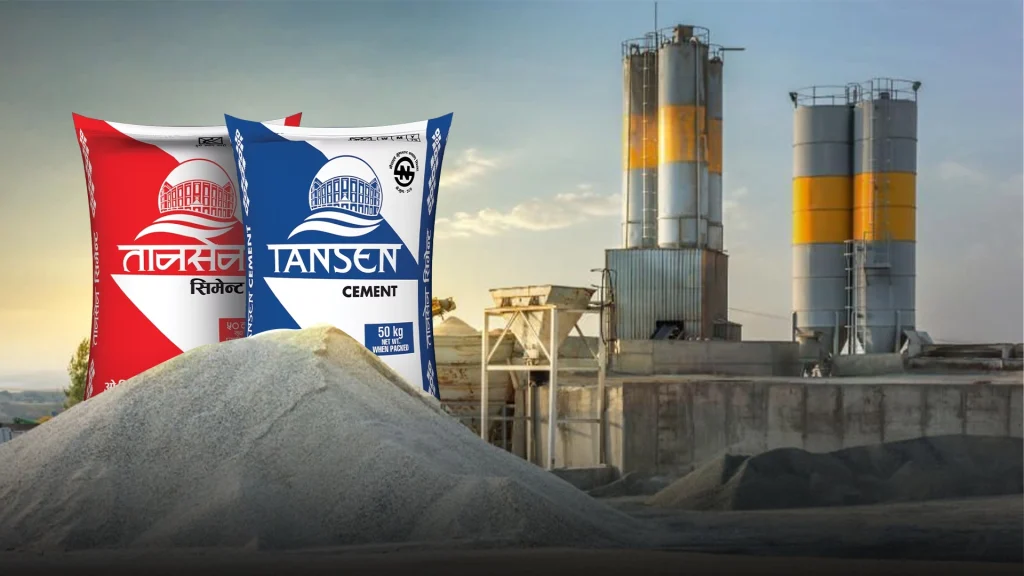
The company markets its products under the brand “TANSEN CEMENT,” producing Ordinary Portland Cement (OPC), Portland Pozzolana Cement (PPC), Portland Slag Cement (PSC), and clinker. Its installed capacity positions it among large-scale producers in Nepal, with clinker production capacity of 1,800 metric tons per day and cement production capacity of 2,200 metric tons per day. While current utilization levels indicate room for efficiency improvements, management has outlined a structured plan to optimize operations over the next three fiscal years.
Nepal’s cement industry has undergone a significant transformation over the past decade. Once dependent on imports, the country has now become largely self-sufficient and is increasingly export-oriented. The Indian market—one of the world’s fastest-growing construction economies—has become a strategic destination for Nepali cement manufacturers. PCIL has already secured certification required for exports to India and has established its presence in cross-border trade, reducing reliance on Nepal’s relatively small domestic retail market.
Financially, the company has demonstrated gradual improvement. Earnings per share and net worth per share have shown consistent growth over recent fiscal years. However, like many capital-intensive manufacturing industries, cement production requires substantial debt financing. PCIL currently carries significant long-term and working capital loans from major commercial banks, including Nabil Bank Ltd., Himalayan Bank Ltd., and Global IME Bank Ltd.. A primary objective of the IPO is to reduce this debt burden by repaying permanent working capital loans, thereby lowering interest expenses and strengthening the balance sheet.
From a project-return perspective, the company reports a positive Net Present Value (NPV) and an Internal Rate of Return (IRR) of approximately 13.78%, indicating moderate but stable long-term industrial returns. In infrastructure-linked industries, predictability and sustainability often matter more than rapid short-term gains. Cement demand typically mirrors national development cycles, making it closely tied to macroeconomic stability and government capital expenditure.
Yet, no industrial story is complete without acknowledging risks. Cement production depends on imported coal and other raw materials, exposing the company to foreign exchange fluctuations. Interest rate movements can impact debt servicing costs. Domestic competition remains intense, as Nepal’s cement retail market is relatively small compared to installed industry capacity. Additionally, environmental compliance standards are tightening globally, requiring continuous investment in pollution control systems and sustainable practices.
Despite these risks, PCIL’s integrated model, mine ownership, export orientation, and structured governance framework create a compelling industrial narrative. The company operates under established corporate governance guidelines and maintains quality certifications that enable both domestic credibility and international trade access.
In many ways, this IPO represents more than a funding event—it symbolizes a transition. It reflects Nepal’s evolving industrial base, its ambition to export value-added products, and its effort to strengthen infrastructure-led growth. For investors, the opportunity lies not in short-term speculation but in participating in a foundational sector that supports national development.
Cement may not be glamorous, but it is essential. It builds roads, bridges, homes, and industries. And when a company controls its raw materials, expands into export markets, and moves strategically to reduce leverage, it signals long-term intent.
As Nepal continues its infrastructure journey, Palpa Cement Industries Limited aims to turn limestone into lasting legacy.
For a fully detailed IPO Equity Research Report, click below to download.