
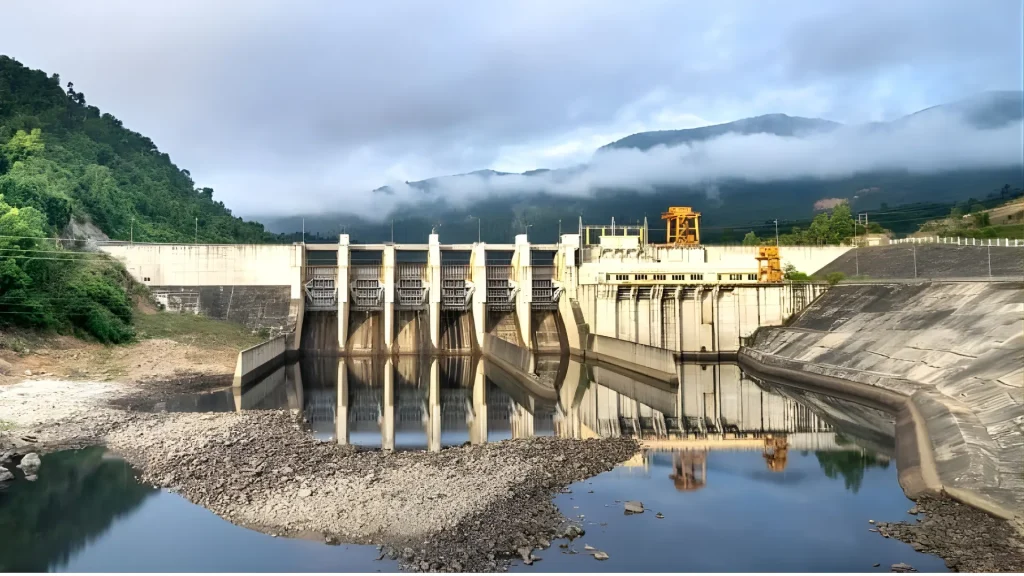
Ridge Line Energy Limited has entered Nepal’s primary capital market at a time when the country’s hydropower sector is gaining renewed attention amid rising electricity demand, export potential, and policy support for renewable energy. As Nepal positions itself as a regional energy exporter, hydropower companies with operational projects and long-term power purchase agreements (PPAs) are increasingly drawing investor interest. Against this backdrop, the IPO of Ridge Line Energy Limited offers investors exposure to a mid-sized operational hydropower project, while also requiring a careful assessment of sector-specific and financial risks.
Ridge Line Energy Limited was incorporated on Magh 26, 2073, and later converted into a public limited company on Jestha 25, 2079. The company is headquartered in Lalitpur Metropolitan City, Ward No. 01, and operates in the power generation business. Its core asset is the Super Chepe Hydropower Project, a 9.05 MW run-of-river project located in the Gorkha and Lamjung districts, utilizing water from the Chepe River. The project has secured a long-term Power Purchase Agreement valid from Poush 19, 2075 to Jestha 6, 2113, providing revenue visibility over nearly four decades. Commercial operation commenced on Poush 8, 2080, ahead of the revised completion schedule, reflecting timely project execution.
The company’s issued capital stands at NPR 1 arba 18 crore 50 lakh. Of this, 22 percent, equivalent to 26.07 lakh shares, is being offered to the public through the IPO. The remaining 78 percent is held by promoters, indicating strong promoter commitment. Within the public issue, shares have been reserved for various investor categories, including local residents, foreign Nepalis, mutual funds, and company employees. After these allocations, the remaining portion will be available to the general public. The IPO is being managed by Prabhu Capital Limited.
From a financial perspective, Ridge Line Energy shows a transition from construction-phase numbers to early operational performance. The company’s paid-up capital increased steadily from NPR 23.68 crore in FY 2079/80 to NPR 60.45 crore in FY 2080/81, and further to NPR 92.43 crore in FY 2081/82. Net profit has remained positive, recorded at NPR 5.10 crore, NPR 7.43 crore, and NPR 7.32 crore over the same periods, respectively.
Without considering IFRIC-12 adjustments, earnings per share (EPS) stood at –2.17 in FY 2079/80, improving to 8.92 in FY 2080/81, and slightly moderating to 7.92 in FY 2081/82. Similarly, net worth per share improved from NPR 92.20 to NPR 105.75, and further to NPR 118.28 over the three-year period. These figures suggest strengthening financial fundamentals as the project moves into stable operations, although earnings are still in the early phase of normalization.
Ridge Line Energy has received an issuer rating of CARE-NP BB, upgraded from CARE-NP BB–, indicating a moderate degree of risk in meeting financial obligations. While this rating reflects improving credit quality, it also signals that the company is not free from financial and operational vulnerabilities.
The company’s promoter base includes experienced institutional investors such as Muktinath Capital Limited, Prabhu Dynamic Private Equity Fund–I, Sopan Multiple Company Limited, and Bishal Group Limited. The Board of Directors comprises individuals with backgrounds in finance, hydropower development, banking, and corporate governance, which strengthens strategic oversight. The company plans to utilize IPO proceeds primarily for repayment of bank liabilities and investment in new hydropower projects, a strategy that aims to improve balance sheet health while supporting future growth.
From an investment standpoint, Ridge Line Energy Limited represents a long-term infrastructure play rather than a short-term trading opportunity. Hydropower projects offer predictable revenue through PPAs but are inherently exposed to hydrological risk, seasonal generation variability, and climate-related uncertainties. While the company’s early operational performance is encouraging, cash flows may fluctuate depending on water flow conditions and system demand.
In conclusion, the IPO of Ridge Line Energy Limited appears suitable for investors with a long-term investment horizon and moderate risk appetite, particularly those seeking exposure to Nepal’s renewable energy sector. Conservative investors focused on immediate returns and dividend stability may find the offering less attractive at this stage. As with any hydropower investment, careful consideration of operational risks, financial leverage, and sector dynamics is essential before making an investment decision.
For a fully detailed equity research report on this IPO, please click the link below to download.